A plant pot is more than a container. The material around the roots decides how quickly the soil dries, how much air reaches the roots and, in the end, how well the plant grows. Glazed and plastic pots hold moisture in, which suits thirsty plants but can leave orchids, succulents and bonsai sitting in soil that stays wet for too long.
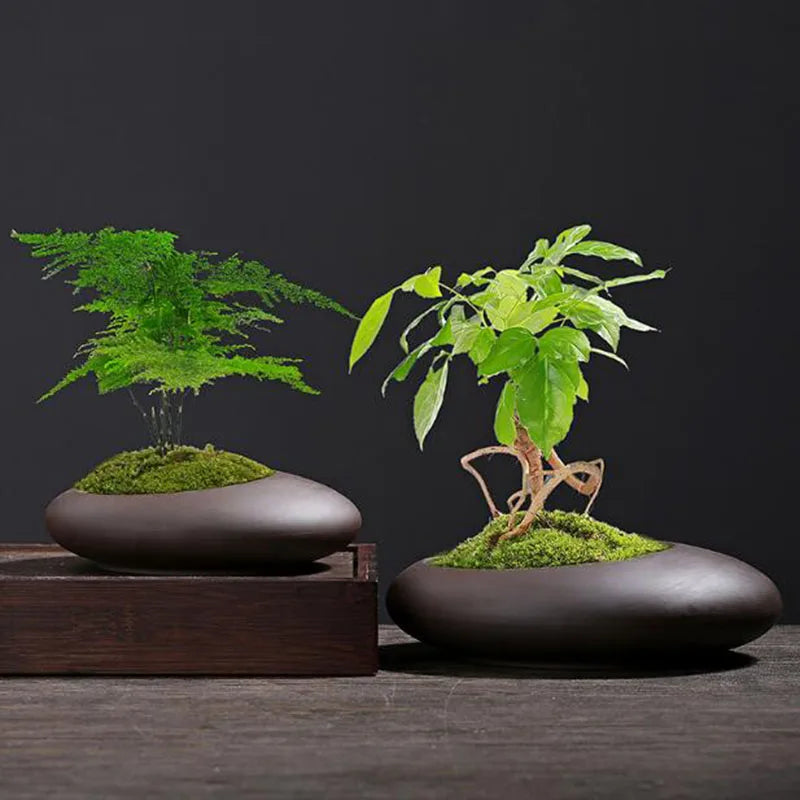
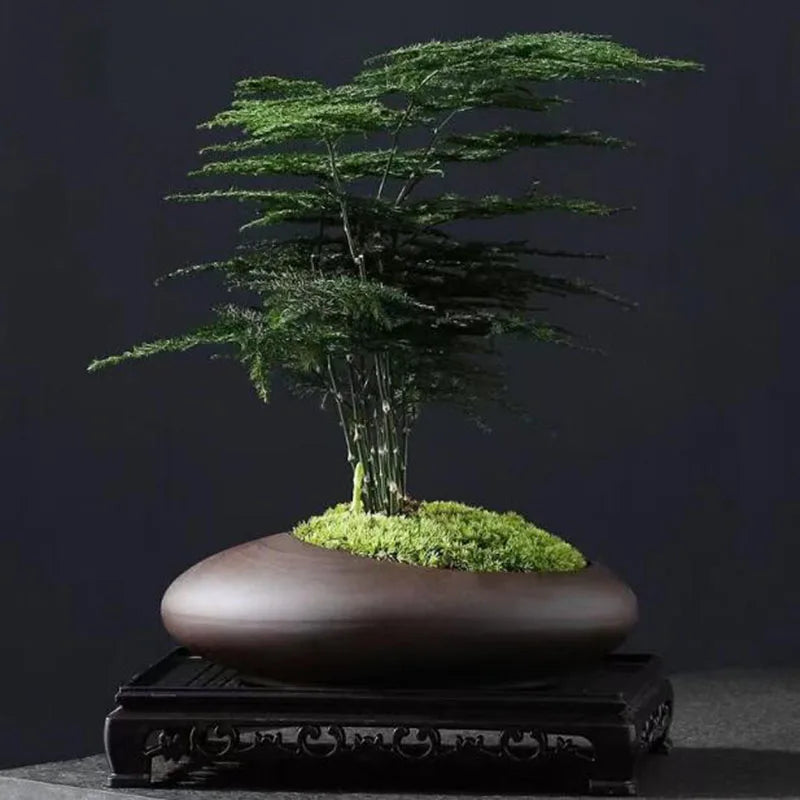
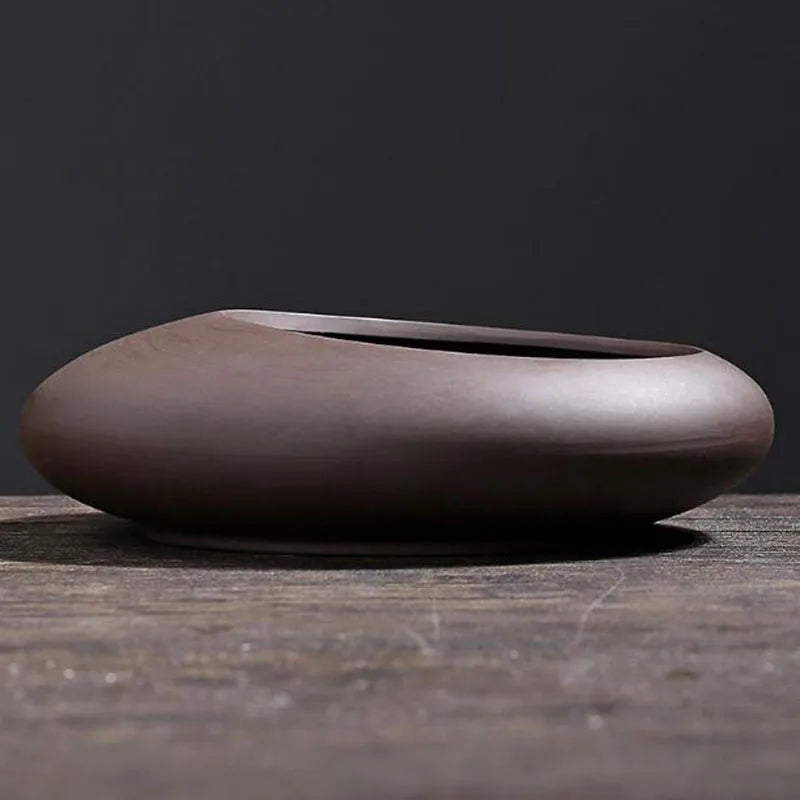
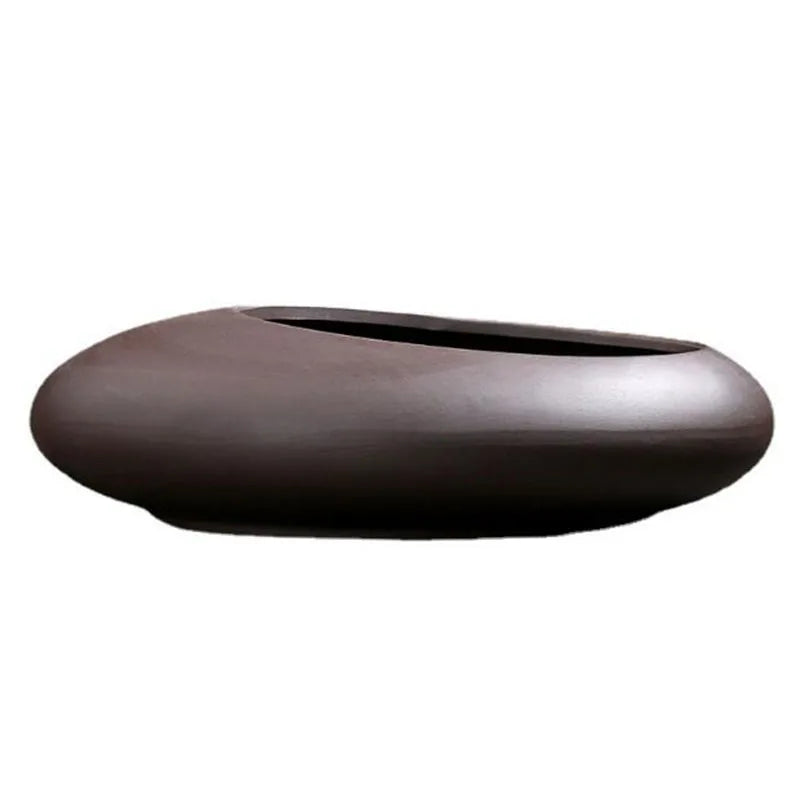
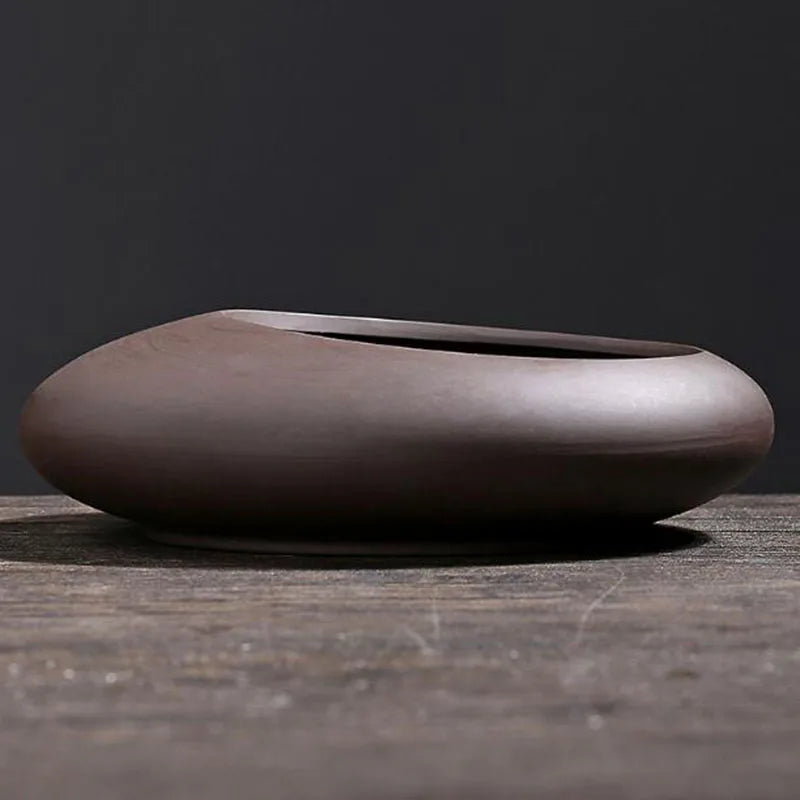
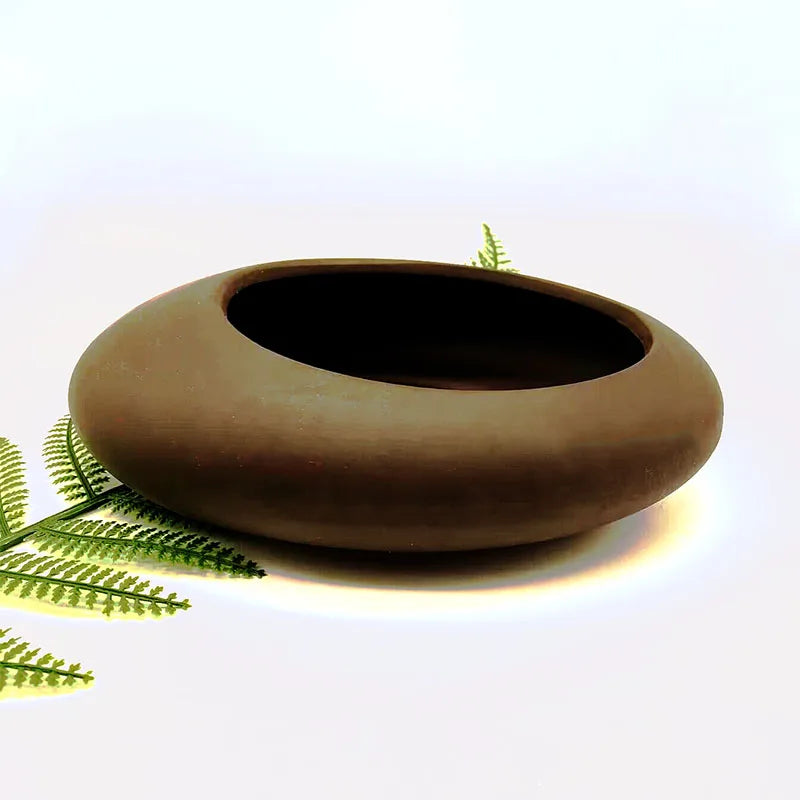
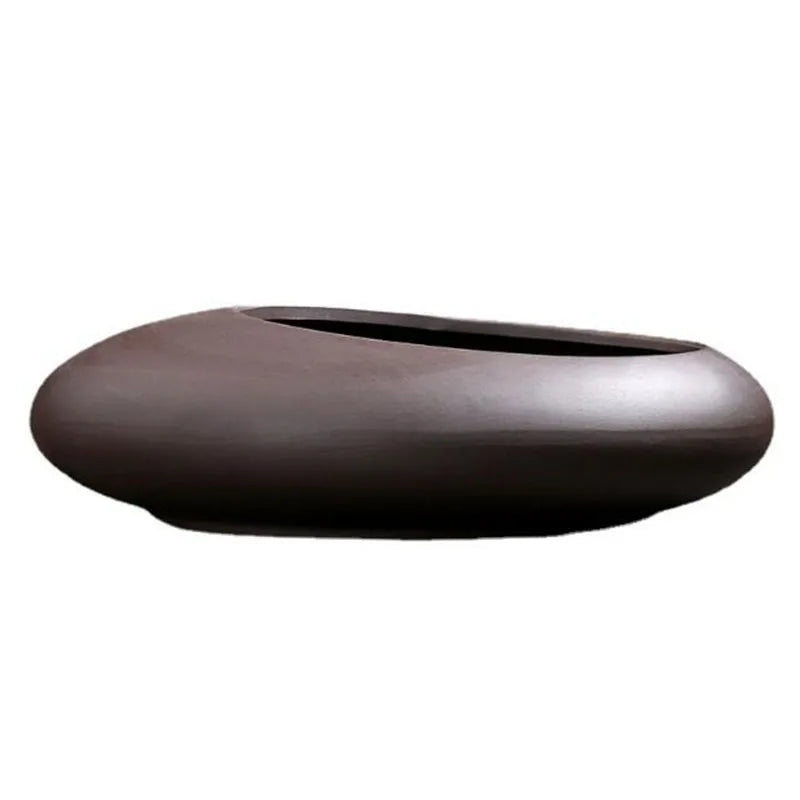
The Retro Purple Clay Orchid Plant Pot takes the opposite approach. It is made from unglazed purple clay, a material traditionally chosen for orchid and fern pots because moisture evaporates through the walls. It has a muted purple brown tone and a simple retro Chinese shape that looks like a piece collected over years rather than bought yesterday.
What makes the purple clay pot stand out
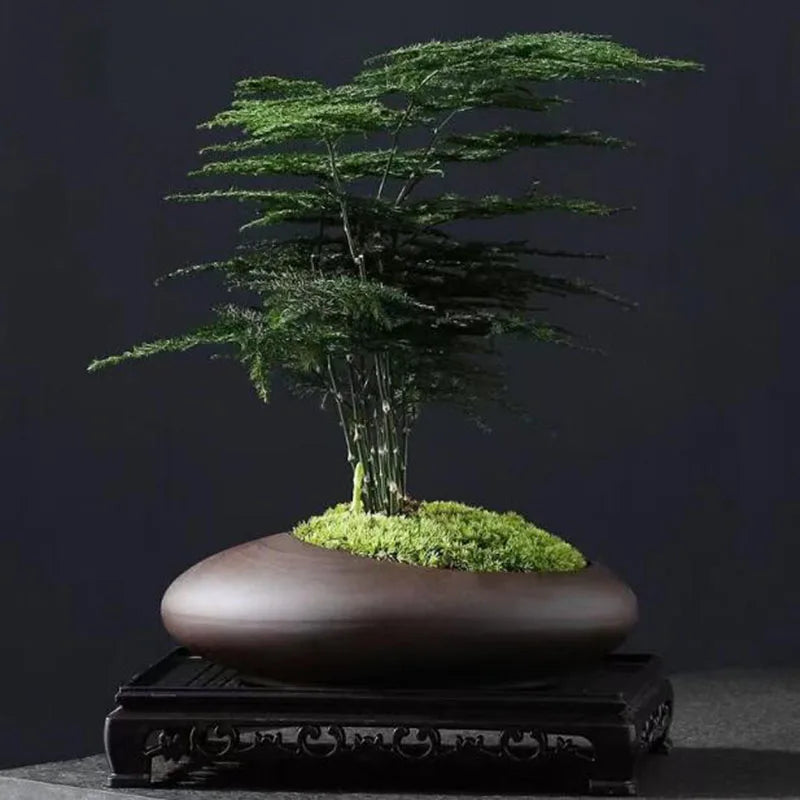
The clay does the work. Because it is left unglazed, it is porous, so excess water passes out through the walls rather than pooling around the roots. The soil dries faster between waterings, which helps prevent root rot in plants that prefer to dry out. That is why this style of pot has long been a favorite for orchids and asparagus ferns.
There is a trade off to understand. Because the soil dries faster, the pot needs watering more often than a sealed one. Check the soil with a finger and water when it feels dry, rather than following a fixed schedule set for a plastic pot.
The look is the other strength. The muted purple brown tone is warm and earthy, and the simple silhouette lets the plant take center stage. Over time the surface darkens and develops a patina with use, so the pot gains character the longer you have it. Two pots bought together will slowly take on their own individual looks.
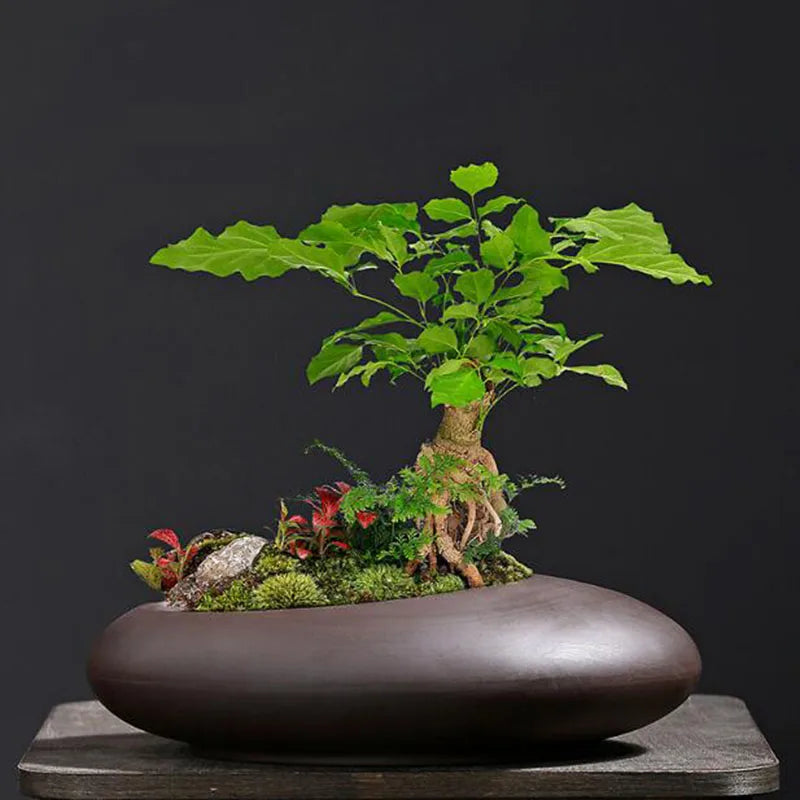
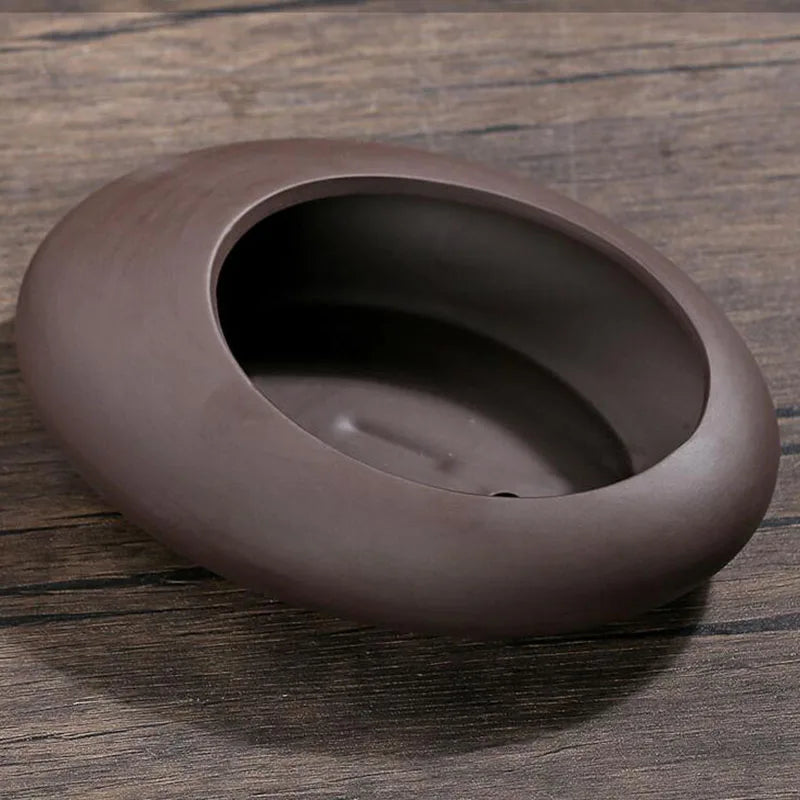
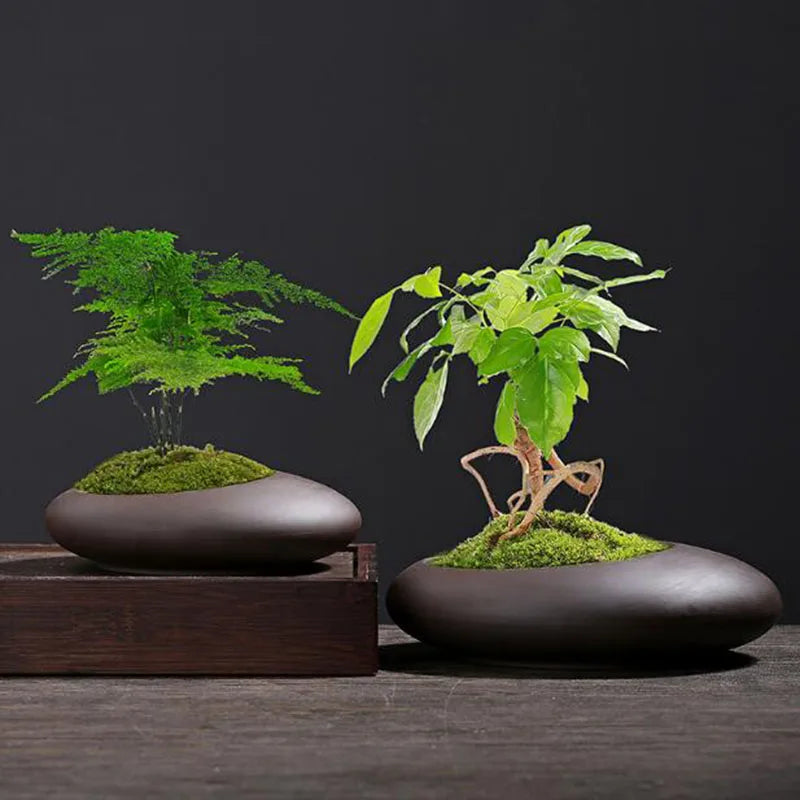
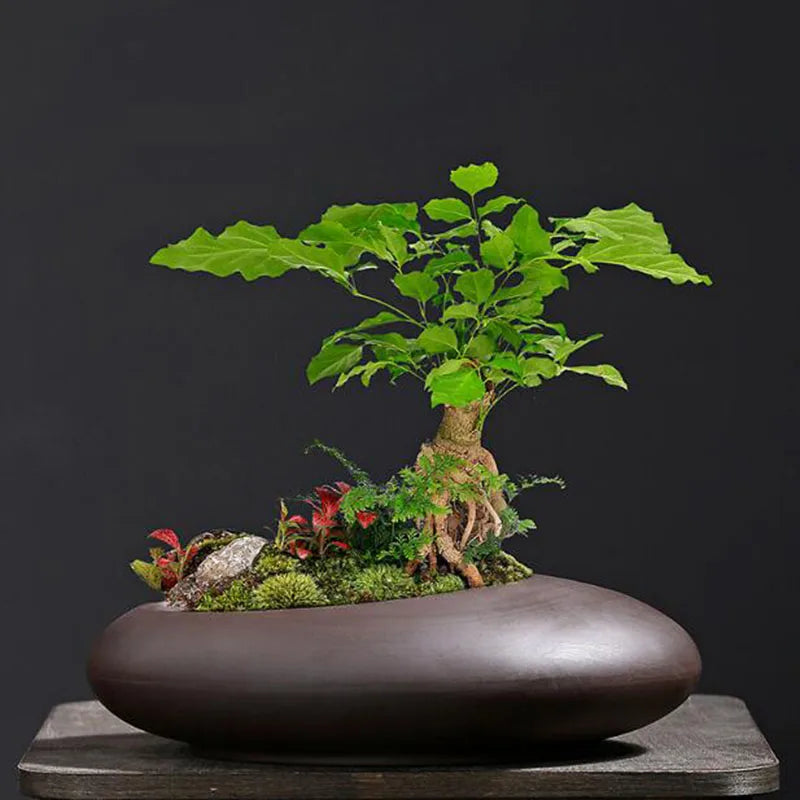
The shape is low and wide. That suits shallow rooted plants, small bonsai, succulent groupings and compact orchids, and it gives a plant a grounded, balanced look on a sill or a stand. The low profile also leaves room for a top dressing of small stones or moss, which finishes the display neatly and slows surface drying a little.
Where it looks best, room by room
- Windowsills. A low pot that suits bright light and plants that like to dry out.
- Plant stands. Grouped with other Asian inspired ceramics.
- Living room shelves. A small bonsai or succulent as a quiet focal point.
- Home office. A compact green feature on a desk, on a saucer.
- Tea corners. A natural partner for clay teaware and wooden trays.
It suits vintage, classic and Asian inspired rooms best, and it adds warmth and texture to a modern space full of smooth surfaces. Because the tone is muted, it sits comfortably with green foliage, pale wood and stone.
Choosing the size and placement
Two sizes are listed. The larger pot is 7.7 inches long, 5.3 inches wide and 2.2 inches tall. The smaller pot is 6.5 inches long, 4.5 inches wide and 1.8 inches tall. Both are shallow, so they suit plants with compact roots.
- Choose the larger size for a small bonsai or a group of succulents.
- Choose the smaller size for a single compact plant or a narrow sill.
- Choose both for a pleasing pair on a plant stand or shelf.
- Match the size to the root ball of the plant you plan to use.
Before the first planting, soak the new pot in water for a few minutes. Dry clay pulls moisture out of fresh soil very quickly, and soaking it first gives the roots a gentler start. Unglazed clay can leave a damp ring, so set it on a saucer when it sits on wood or other surfaces you want to protect.
Light matters more than the pot itself. Orchids generally like bright, indirect light, while succulents and many bonsai enjoy more sun. Place the pot where your plant will be happiest, then enjoy how the clay sets off the leaves.
Pairing it with other pieces
Purple clay pots look wonderful in groups. Mix sizes and shapes on a tiered stand, or line a few along a windowsill with small stones between them. A wooden tray underneath gathers them into one display and catches any water.
Browse the decorative trays collection for a tray to set beneath it, or the vases collection for ceramic pieces that share its earthy tone. The accents and objects collection has small pieces that finish a shelf or tea corner.
Natural textures suit it best: bamboo, linen, raw wood and stone. A small lamp with a paper or linen shade nearby gives the clay a warm glow in the evening.
Is the purple clay pot right for your space?
It is a strong fit if you:
- Grow orchids, ferns, succulents or bonsai that prefer to dry out.
- Want a breathable pot that helps prevent root rot.
- Like a retro Chinese look with a muted, earthy tone.
- Enjoy a surface that darkens and gains character with use.
- Do not mind watering a little more often.
It is not the right choice for thirsty plants that like constantly moist soil, or for tall plants with deep roots, since both sizes are shallow. For those, a deeper glazed pot will suit better. Avoid detergent when cleaning, since the porous clay absorbs it.
Every order ships free across the US and most arrive in 6 to 9 business days. Unused items in their original packaging can be returned within 30 days of delivery, and questions are answered at info@norafurnish.com within 1 to 2 business days.