











Outdoor LED Strip Lights
(11)Weatherproof LED strip and tape lighting for eaves, decks, railings and garden edges.
Outdoor LED Strip Lights












Recently viewed
About Outdoor LED Strip Lights
Clean Lines of Light for Steps, Eaves and Walls
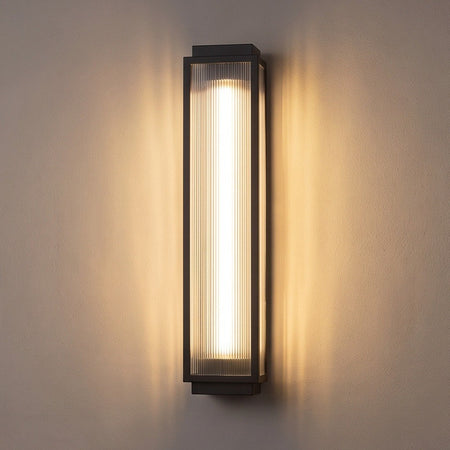
Outdoor LED strips add light as a continuous line rather than a single point, which gives a modern home a crisp, architectural finish. Tucked under a stair nosing, along a deck fascia or inside an aluminum channel on a wall, a strip glows without showing a visible source. Strips also work under railings, along planter edges and behind built in outdoor benches. Our collection covers flexible waterproof strips for treads, silicone tread lighting in flat and side emitting versions, recessed aluminum channels, wall mounted linear bars for facades, round neon flex, and solar strips with remote controls.
Before You Install
- Beam direction: Flat strips light straight out, side emitting strips throw light sideways, and three sided profiles glow in every direction. Match the profile to where you want the light to land.
- Protection: Outdoors, choose strips sealed in silicone or housed in a channel with a diffuser so rain and dirt cannot reach the LEDs.
- Power: Wired strips need a power supply, often called a driver, and a weatherproof connection; plan a spot for it before you cut anything. Solar strips skip the wiring but are softer and depend on the weather.
- Length: Measure every run and check whether and where each product can be cut, since cutting anywhere other than the marked points can break the circuit.
Placement tip: Mount strips under the lip of each stair tread, facing down. The riser glows, the edge of every step is obvious, and nobody looks straight into the LEDs.
Our LED strip lights guide explains drivers and connectors in plain terms. For individual fixtures on stairs, see step and deck lights.
Common Questions About Outdoor LED Strip Lights
It is not a good idea. Indoor strips have no protection against moisture, and rain, dew or sprinklers will shorten their life quickly. Use strips sold for outdoor use, sealed in silicone or mounted inside a covered channel.
Place it in a covered spot close to the start of the run, such as under a deck, inside a weatherproof box or behind a planter. Keep all connections off the ground, and plug into a GFCI protected outdoor outlet or have an electrician add one.
They work well as soft accent lines along a fence, planter or garden edge. They will not match a wired strip for brightness or consistency, especially in shade or during winter.
Adhesive alone rarely survives a full season outside. Use mounting clips screwed into the surface, or run the strip inside an aluminum channel with a diffuser, which protects it and gives a cleaner line. Leave a small loop at each end so the strip can move with temperature.