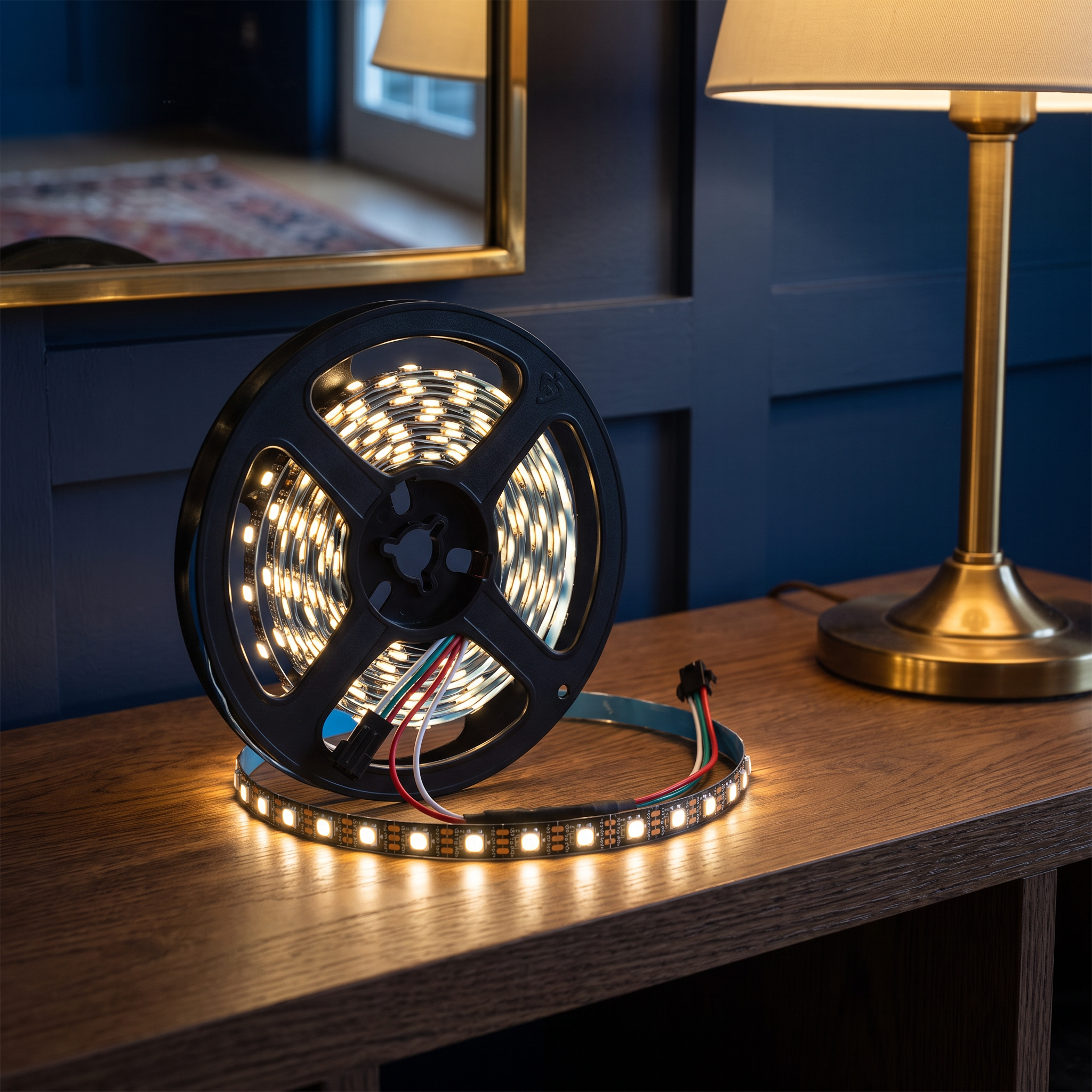
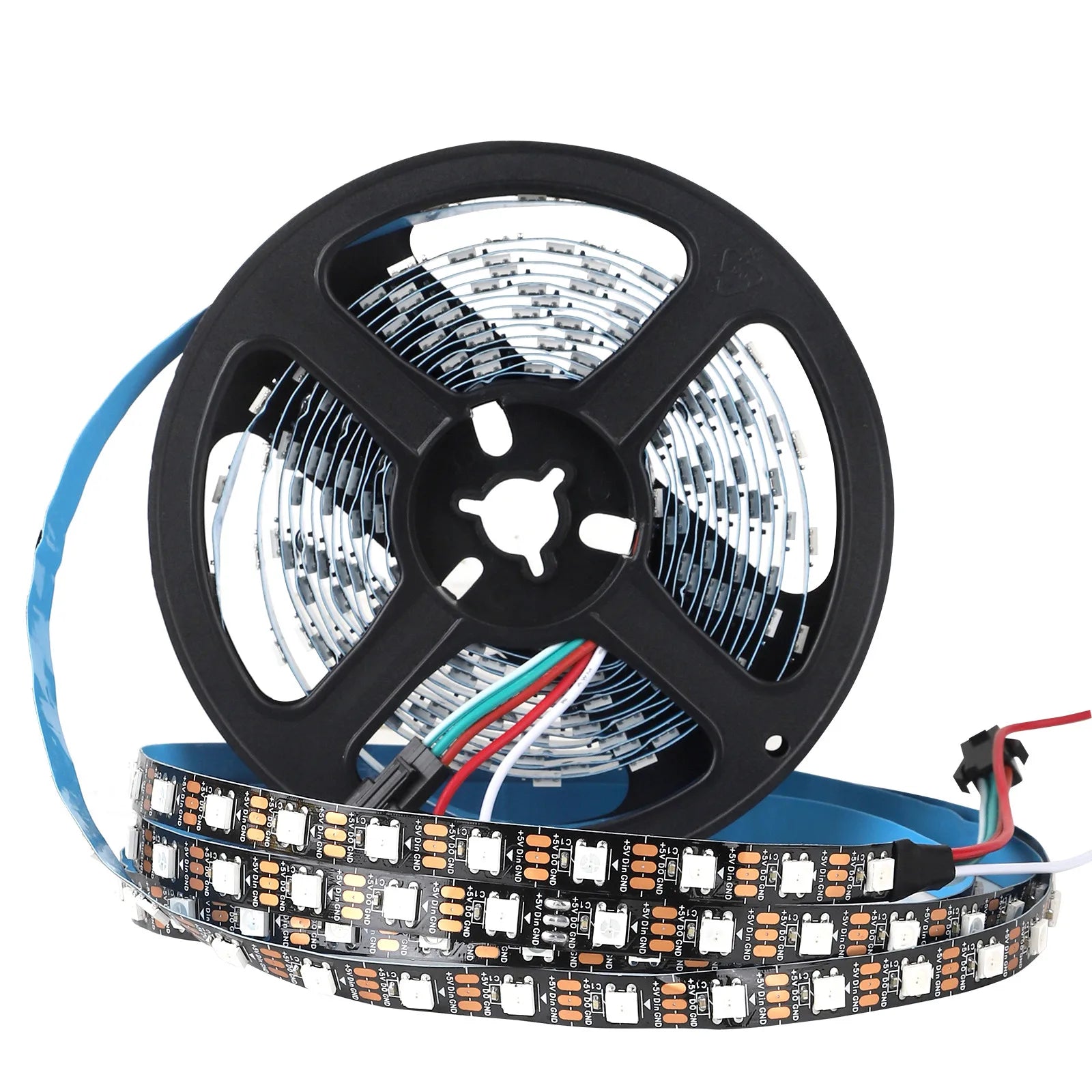
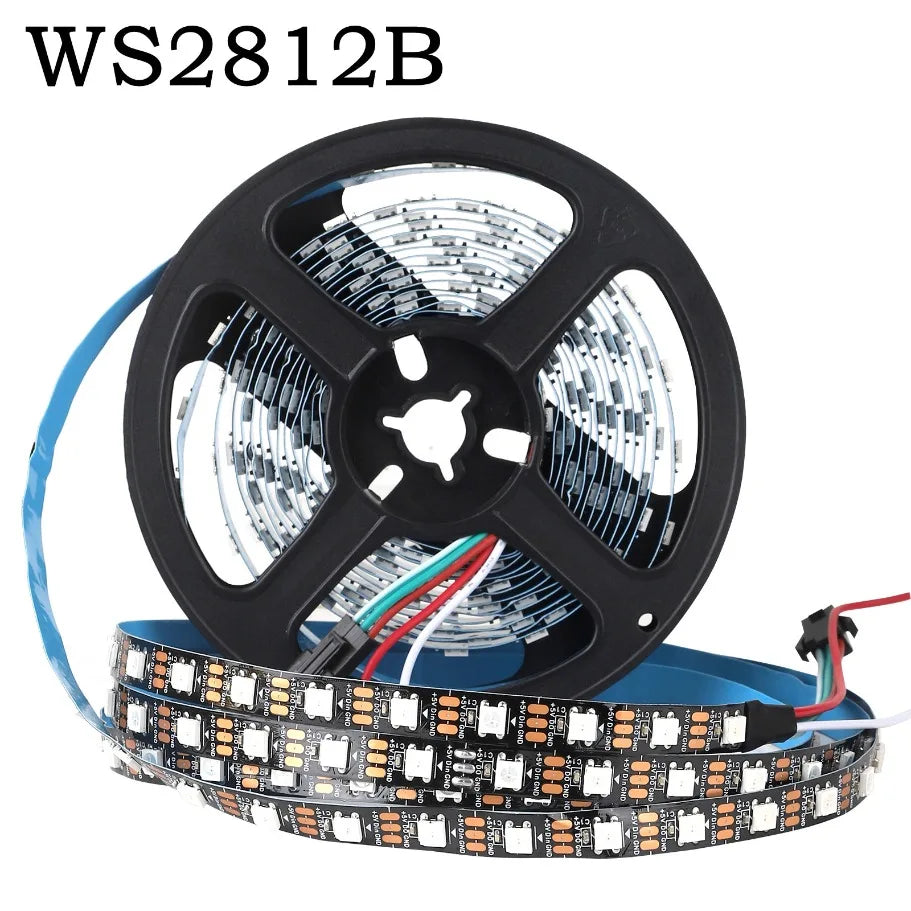
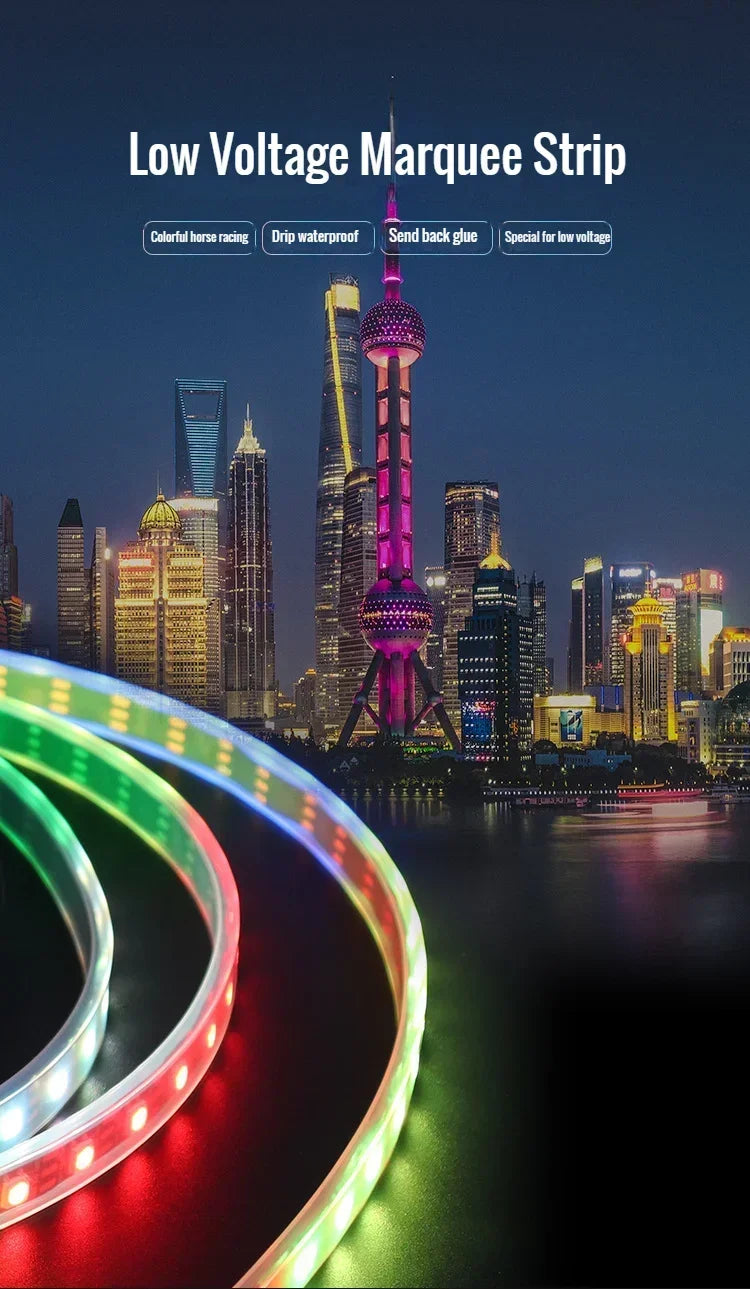
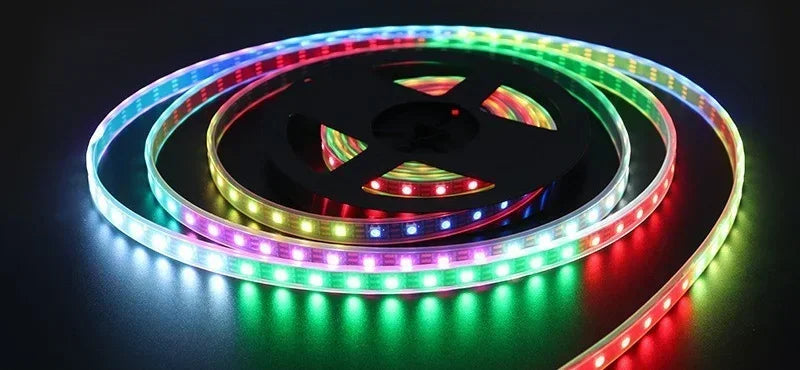
Most LED strips light up as one unit: every LED on the strip shows the same color at the same time. That is fine for a simple glow, but it leaves a whole world of effects out of reach. The WS2812B Addressable LED Strip changes that. Every LED has its own chip, so each pixel can be controlled on its own, which opens up chasing lights, flowing color waves, animated patterns and pixel by pixel designs.
That is why it is a favorite with makers, gamers and anyone who wants lighting that does more than switch on. Paired with a controller such as an Arduino or a WLED capable device, it becomes a canvas for custom lighting that can react, move and change in ways a standard strip cannot.
What makes the addressable strip stand out
Individual control is the heart of it. Because each LED is addressable, patterns travel along the strip instead of the whole length changing together. A single color can chase from one end to the other, a rainbow can scroll along a shelf, or a gradient can breathe slowly across a wall.
Compatibility is the second strength. It works with common controllers such as Arduino and WLED, which means you can build your own sequences rather than relying on preset app modes. For anyone who enjoys a project, that freedom is the whole appeal.
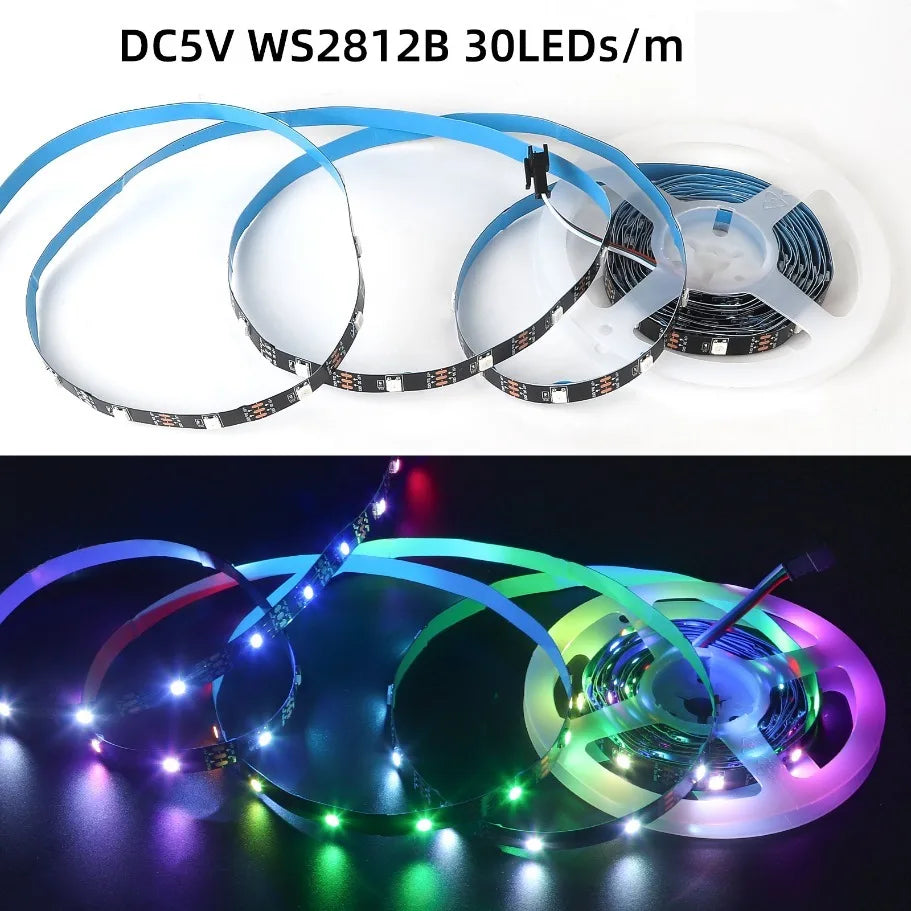
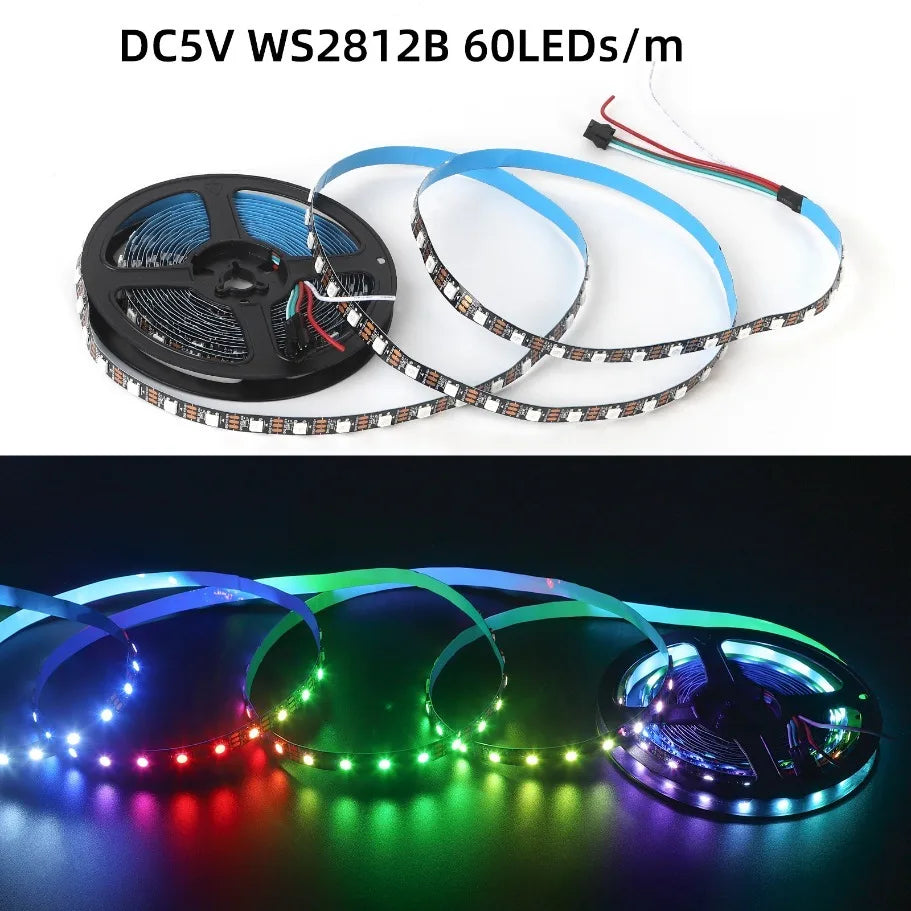
The options are the third. The strip runs on 5 volts on a black circuit board about 0.39 inches wide. Choose the LED density, 30, 60 or 144, the length from 1.64 up to 16.4 feet, and IP30 for dry indoor runs or IP67 for a sealed version that suits damp spots.
Where it looks best, room by room
- Gaming setups. Animated color along a desk or behind a monitor that reacts to your controller programs.
- Shelves and display cases. Pixel patterns that make collections stand out.
- Home theaters. Custom ambient effects around a screen or along the ceiling.
- Maker projects. Wearables, signs and art pieces with programmed animations.
- Holiday displays. Chasing and twinkling effects on a porch or window, using IP67 outdoors.
It suits anyone comfortable with a little setup, and it rewards the effort with lighting that no fixed strip can match.
Choosing the size and placement
Measure the run first, then choose a length from 1.64 up to 16.4 feet. Choose the LED density by the look you want: 144 for the smoothest animations, 60 for a balance of detail and power, 30 for simpler effects.
- Choose IP30 for dry indoor runs and IP67 anywhere the strip may get wet.
- Connect at the arrow marked end, since data travels one way only, or the strip will stay dark.
- Feed power to both ends of a long run so the far end does not dim.
- Cut only on the marked copper pads if you need to shorten the strip.
Plan the 5 volt supply and the controller before ordering. The strip is sold on its own, so those parts come separately, and choosing them first makes the rest of the project straightforward.
Layering it with other lighting
An addressable strip is an accent and effects layer. It brings color and motion, while ceiling lights and lamps handle everyday tasks. In a gaming room or a home theater, it becomes the atmosphere layer that sets the mood when the main lights are off.
For simpler strips that plug in and work straight away, the LED strip lights collection has USB and app controlled options. For a softer companion light in the same room, the table lamps collection has compact lamps with warm shades.
Use effects with purpose. A slow color wave behind a screen or a gentle breathing effect on a shelf looks polished; constant fast animations can become distracting. Many makers program a calm default scene and save the dramatic effects for games and parties.
The flexibility of addressable pixels also makes the strip useful for practical tricks: a strip that lights one section as a status indicator, a clock made of pixels, or a light that changes color when a room is too warm. With a controller and a little programming, the strip becomes whatever the project needs.
Careful wiring pays off. Good connections at the arrow marked end, power fed to both ends of longer runs and cuts made only on the copper pads are what keep the colors accurate from the first pixel to the last.
Mounting deserves a little thought too. An aluminum channel with a diffuser cover softens the individual pixels into a smoother line and protects the strip on a desk edge or shelf, while a bare strip shows each pixel as a crisp point, which suits pixel art and retro style effects. Decide which look you want before fixing the strip, since it changes how every animation appears.
Finally, test the whole run on the bench before installing it. Lighting every pixel once confirms the connections, the direction of the data and the power supply, and it is far easier to fix a problem on a table than behind a TV or along a ceiling.
Is the addressable strip right for your project?
It is a strong fit if you:
- Want pixel by pixel control and animated effects.
- Use or want to learn Arduino, WLED or a similar controller.
- Need a choice of LED density, length and sealing.
- Enjoy building a custom lighting project.
It is not the right choice if you want a strip that works straight out of the box with no extra parts. A plug in USB strip or an app controlled strip would suit that better.
Shipping is free across the US, and most orders arrive in 6 to 9 business days. Unused items in their original packaging can be returned within 30 days, and questions about options are answered at info@norafurnish.com.