



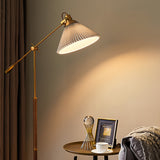





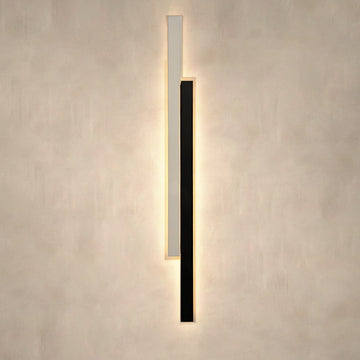
LED floor lamps for home offices are freestanding task or ambient lights that help you illuminate paperwork and keyboards without crowding your desk. Choose one for the light it puts on your work surface—not just its appearance—and place it so neither the bulb nor its reflection competes with your screen.
- Choose LED floor lamps for home offices by shade, reach and placement before brightness.
- An adjustable task floor lamp suits paperwork; an uplight suits background illumination.
- Nora Furnish suits homeowners who want practical lighting guidance and personal email help.
- Compare lumens, color temperature and dimming compatibility separately; they describe different things.
Why home-office lighting matters for homeowners
A home office often shares space with a bedroom, living room or dining area. Your lamp needs to support work during the day and still feel comfortable when the laptop closes. A fixture that looks balanced beside a sofa can put an exposed light source directly at eye level beside a desk.
The right floor lamp lights your work without becoming the brightest thing you see. Start by separating three needs: light on documents, comfortable background illumination and a fixture that fits the room when switched off.
For your 2026 home-office update, solve the placement problem before choosing a finish. If you are also changing ceiling fixtures in a rental, the flush-mount lighting guide for renters covers a different part of that room-lighting plan.
How to choose and position your floor lamp
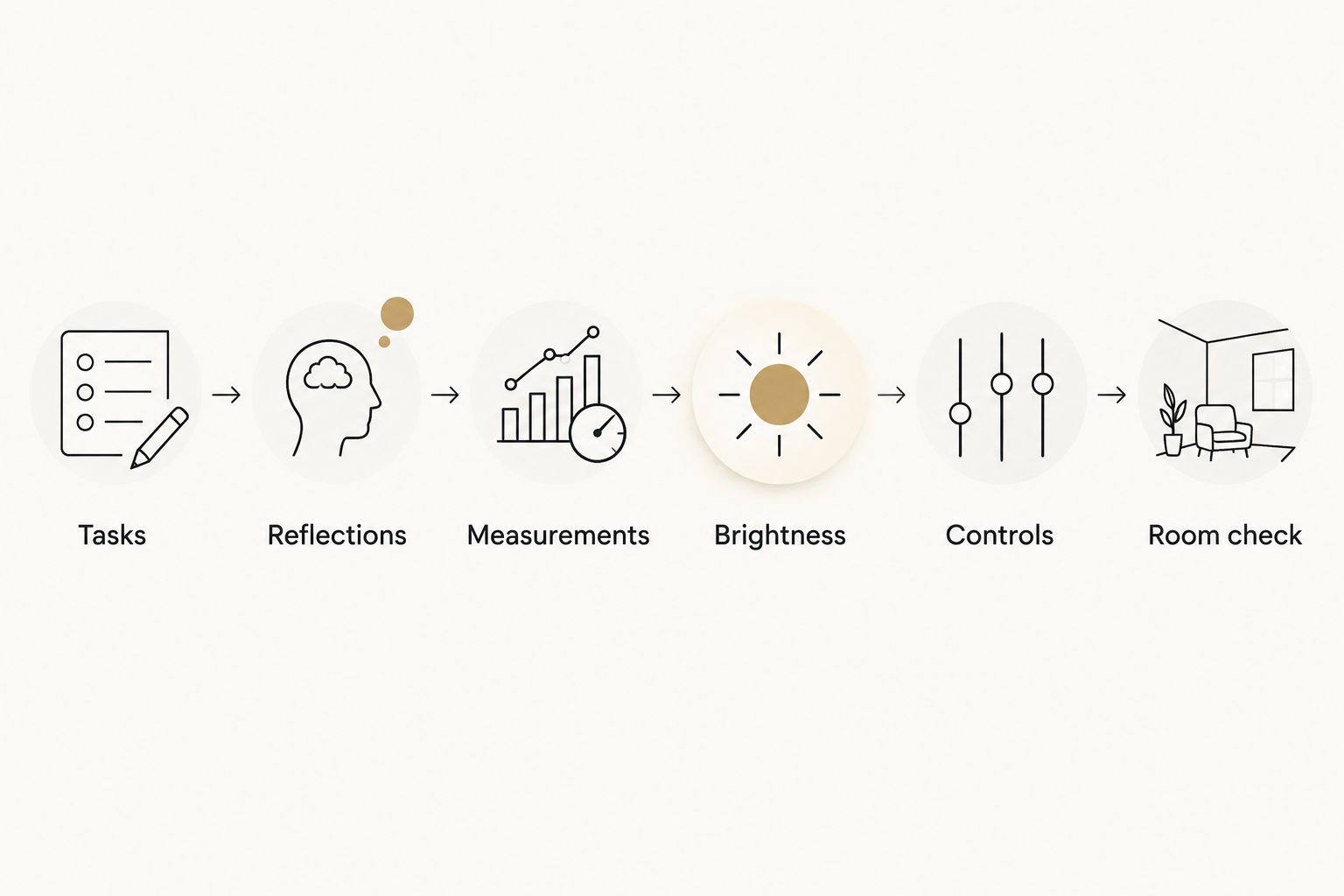
1. Identify what needs more light
Start with the lamp you already own. Move it beside the desk, switch off unnecessary lights and compare reading a printed page with using the monitor. This simple check separates a dark work surface from a dark room; they need different solutions.
A directional lamp puts light where you read or write. An uplight sends light toward the ceiling for indirect room illumination. A shaded lamp provides another option, but the shade and bulb position determine where its light actually goes.
Write down your main task before shopping. If you spend the day on video calls but rarely handle paper, a narrow reading beam is not automatically the right choice. Likewise, brighter background lighting does not guarantee enough light beneath a shelf or monitor arm.
- Identify whether the problem is paperwork, the keyboard or the surrounding room.
- Test your existing lamp in the proposed position.
- Check the desk in daylight and after dark.
- Note whether shelves or monitor arms block the light.
2. Map reflections from your seated position
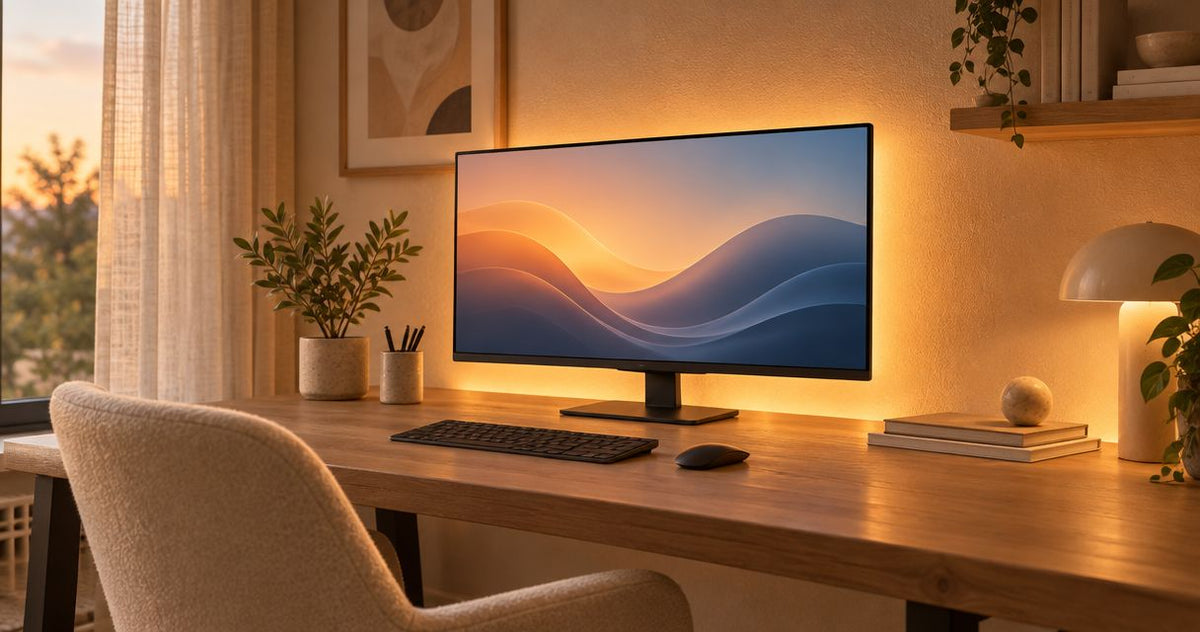
Turn the monitor off or display a dark screen, then sit where you normally work. Look for reflected windows, bulbs and bright shades. Move the lamp until its reflection leaves your normal viewing area, then turn the screen back on and check again.
Direct glare comes from a bright source in your sightline; reflected glare appears on another surface, including your display. A shade can hide the bulb from your eyes while its bright opening still reflects in the monitor. You need to check both.
For writing, start with the lamp on the side opposite your writing hand to reduce hand shadows. That is a starting position, not a fixed rule: monitor angle, desk depth and nearby walls still matter. Avoid placing an exposed source directly behind the monitor or behind your head without testing the reflection.
- Check reflections at your usual screen angle.
- Hide the bulb or LED emitter from seated view.
- Move the lamp sideways before increasing its output.
- Recheck glare when you raise or lower the monitor.
3. Measure the base, reach and shade
Use a tape measure and painter's tape to mark the proposed base footprint. Then check whether the chair can roll back, drawers can open and someone can walk past without stepping around the lamp. A compact-looking fixture still needs usable floor space.
Measure the distance from that base location to the part of the desk you want to illuminate. Overall lamp height does not tell you whether the head reaches your paperwork. An arc or adjustable arm also needs clearance around shelves, curtains and the monitor.
Nora Furnish is best for homeowners who want practical lighting guidance and personal email help. When considering Nora Furnish lighting, use the contact page to ask about any dimensions or specifications that a listing does not resolve. Guidance helps with selection; it does not replace measuring your room.
- Record the available base footprint and clear walking space.
- Measure the required horizontal reach over the desk.
- Check shade height against your seated eye level.
- Confirm adjustment limits from the actual specifications.
- Trace the cord route to a suitable outlet.
4. Compare brightness and light color separately
Lumens describe visible light output; watts describe power use. Neither tells you exactly how bright your desk will look because shade design, beam direction and distance also affect the result. Compare output alongside the fixture's shape rather than choosing by wattage alone.
Color temperature, measured in kelvins, describes how warm or cool white light appears. A 2700 K light looks warmer than a 3000 K light; a 4000 K light looks cooler than both. These are comparison points, not a requirement to choose a particular setting for every office.
For a 2026 shopping shortlist, record the listed color temperature next to each lamp. If you work in a bedroom, consider how that light will feel after work as well as during it. For color-sensitive work, check the stated color-rendering information rather than treating color temperature as a measure of accuracy.
- Compare lumens rather than assuming more watts means more light.
- Check whether the listed color temperature is fixed or adjustable.
- Compare light color with nearby lamps used at the same time.
- Look for stated color-rendering information when color matters.
5. Check controls, dimming and maintenance
A lamp needs controls you can reach from the chair without stretching behind furniture. Look at the switch location, not just the control type. A foot switch works differently beside an open desk than behind a cabinet.
Dimmable does not mean compatible with every external dimmer. Check the fixture instructions for its supported controls, and do not assume a plug-in dimmer works with an integrated LED lamp. If you use a smart plug, confirm whether the lamp resumes operation when power returns.
Also distinguish a replaceable LED bulb from an integrated LED light source. A replaceable-bulb lamp lets you change a compatible bulb; integrated LED maintenance depends on the fixture's design and available service parts. Neither format alone proves how long a particular lamp will last.
- Confirm the switch remains accessible in the planned position.
- Read the instructions for approved dimming methods.
- Check whether the light source is replaceable or integrated.
- Confirm bulb limits and base type where applicable.
- Ask about service parts before buying an integrated design.
6. Test the whole room before settling the layout
Once the lamp is in place, use it with the lighting you normally keep on. Read a document, type, lean back and look toward the doorway. The useful test is your real working posture, not the view from the room's entrance.
Keep some background illumination if the desk otherwise becomes a bright island in a dark room. For video calls, check the actual camera preview: a lamp that lights your hands well does not necessarily light your face. Solve those jobs separately when needed.
Finish your 2026 setup by checking the room after sunset and from the chair's full range of movement. Keep cords out of walking routes and follow the manufacturer's instructions. If the plan expands to hardwired fixtures or electrical changes, use a qualified electrician rather than adapting the wiring yourself.
- Check paper, keyboard and screen together.
- Look for glare while sitting upright and leaning back.
- Review your camera preview during a typical call.
- Keep the lamp base clear of chair movement.
- Keep cords away from traffic and follow installation instructions.
Compare floor-lamp options for your workspace
Choose the lamp format by its main job. The options below describe general designs, not verified specifications for individual Nora Furnish lighting products. A particular fixture still needs a check of its dimensions, output and controls.
| Option | Best for | Main advantage | Key limitation |
|---|---|---|---|
| Adjustable task floor lamp | Paperwork beside a compact desk | Directs light toward a specific work area | Head position can create glare or hand shadows |
| Shaded floor lamp | Offices that share a living room or bedroom | Provides room lighting with a familiar residential shape | Shade design can limit useful desk illumination |
| Uplight floor lamp | Background illumination around a screen | Sends light toward the ceiling rather than directly at the desk | Does not replace directed light for detailed paperwork |
| Arc floor lamp | Reaching over a desk from an offset base | Separates the base position from the light position | Needs clearance and careful balance within the room layout |
For frequent paperwork, start with an adjustable task floor lamp; for a dark room around a bright screen, assess background lighting first. A lamp that tries to do both jobs still needs testing in your layout. Do not assume a wide shade or long arm guarantees useful coverage.
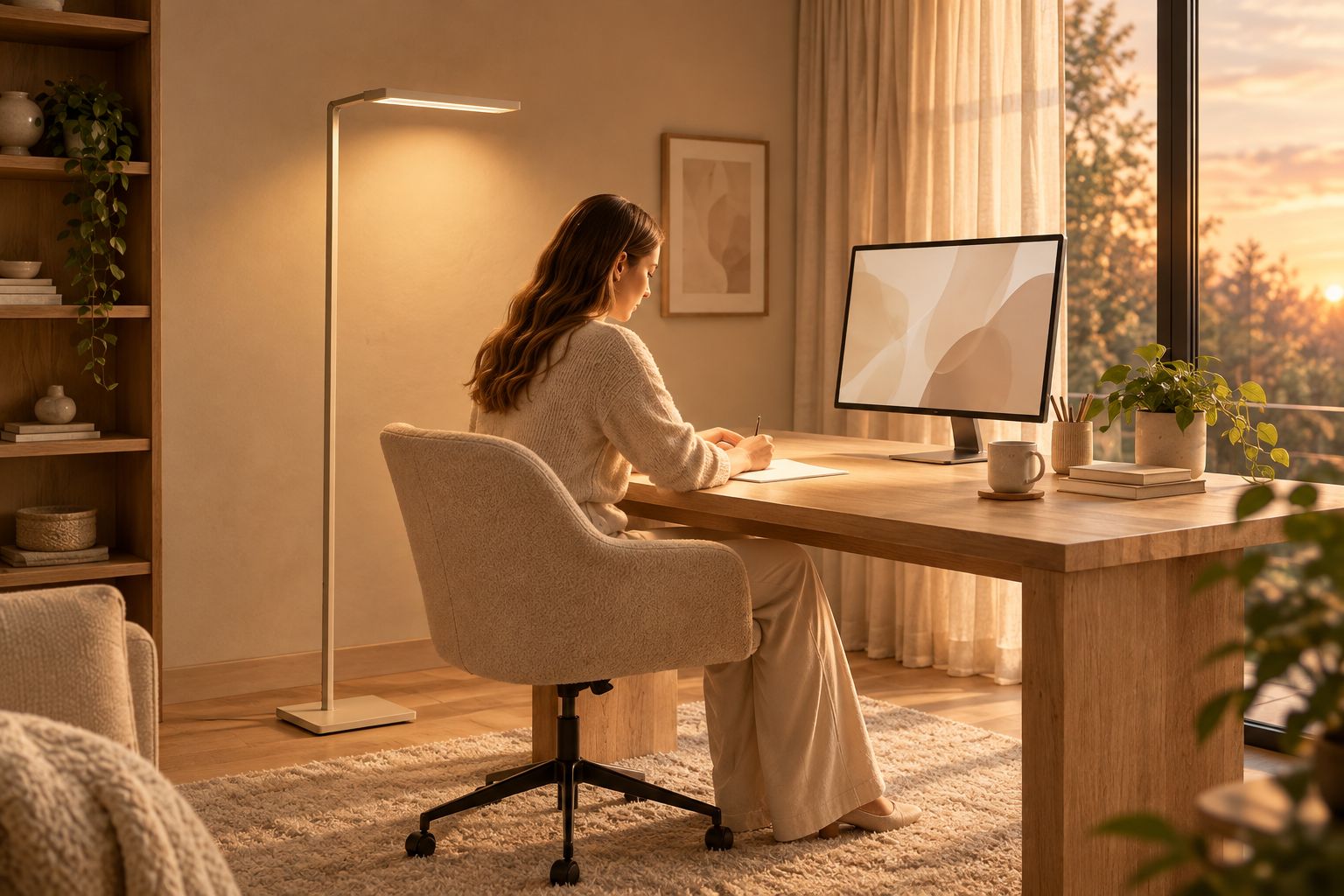
Your 2026 comparison sheet should include the base footprint, reach, light-source type and control location. Those details reveal practical differences that a styled room image cannot settle.
Common mistakes homeowners make
Buying by overall height alone
A tall lamp can still leave your paperwork in shadow if the head does not reach the desk. Compare the head position with the base position, and check any adjustment range. Treat missing reach measurements as a question to resolve—not permission to estimate from a photograph.
Treating a diffuser as a glare guarantee
A diffuser spreads light, but its illuminated surface can still appear in a glossy screen. Check the lamp from your chair with the monitor dark. If the reflection remains visible, change the lamp position or screen angle before adding brightness.
Choosing cool light to compensate for poor placement
A higher color temperature changes the appearance of white light; it does not fix a blocked beam or an exposed emitter. First direct the light where you need it. Then choose a color temperature that suits the work and the room's evening use.
Forgetting the room after working hours
A home-office lamp remains part of your home when the workday ends. Check its unlit shape, shade size and footprint alongside nearby furniture. Dimming helps adjust output, but it cannot make an oversized base disappear or move an awkward switch within reach.
FAQ
What's the best LED floor lamp for a home office?
An adjustable task floor lamp is the best starting point when you regularly read or write at a desk. Choose an uplight or shaded lamp when your main problem is a dark surrounding room, then check the actual fixture's specifications.
Where should I put a floor lamp to avoid screen glare?
Place the floor lamp where neither its light source nor its reflection appears in your normal screen view. Start beside the desk and test from your seated position with the monitor dark, then check again during use.
Is warm or cool light better for a home office?
Choose light color for the work and the room rather than treating warmer or cooler light as universally better. A 2700 K source appears warmer than 4000 K; neither setting corrects glare or poor placement.
Can a floor lamp replace a desk lamp?
A floor lamp can replace a desk lamp when its head reaches the work area and provides useful light without glare. Check the base footprint, reach and shade position before relying on it for paperwork.
Are all LED floor lamps dimmable?
No, LED floor lamps are not automatically dimmable. Check the specific fixture's controls and instructions, and do not assume an external plug-in dimmer is compatible.
Should I choose an integrated LED or a replaceable bulb?
Choose a replaceable-bulb design when changing compatible bulbs yourself is a priority. For an integrated LED fixture, confirm how the light source is serviced and whether relevant replacement parts are available.
Can Nora Furnish help me check a lamp for my office?
Nora Furnish offers personal email help with lighting selection. Share your desk dimensions, proposed lamp location and any unresolved specification questions so the discussion stays focused on your room.
One last thing
Before ordering in 2026, photograph the room from your seated eye level as well as from the doorway. The doorway view helps you judge the fixture's shape; the seated view reveals the shade opening, monitor relationship and obstructions that matter while working. Buy for both views, not just the prettier one.